



You’re leaving soon in Dubai ? Are you wondering what cultural traditions worth learning about to avoid making mistakes?
Here is a clear and concise guide to understanding the main cultural traditions in Dubai. You’ll learn how to respect local customs and make the most of your stay.
An ultra-modern city, Dubai remains deeply attached to its roots. Behind the skyscrapers and air-conditioned shopping centres, one discovers a society rooted in the values of hospitality, respect and religion.
Emirati culture, though often little known, nevertheless influences daily life and social interactions. Local customs include saying «salam alaykum», offering coffee with dates, wearing modest clothing and shaking hands respectfully.
Knowing how to dress, greet people, or even behave during Ramadan can make all the difference. These traditions aren’t just rules: they’re the key to connecting with the locals and enjoying an authentic experience.
In this article, you will find out:
- Everyday behaviours and attitudes to adopt
- Rules to follow in public spaces
- Important religious customs, particularly during Ramadan
- The social and family customs of the Emiratis
Fancy travelling with complete peace of mind? Let’s dive straight into Dubai’s fascinating culture.
Dubai’s cultural heritage
Dubai is a city where modernity and tradition coexist harmoniously. It is important for the expatriates and the property investors to understand Dubai’s cultural heritage.
1. Bedouin roots
The perfect topic to kick off this exciting journey! The cultural roots of Dubai come from Bedouins, a proud, hospitable desert people who are deeply attached to their families and traditions.
The Bedouins lived in the desert, in tents. They reared camels, hunted, and often moved around in search of water and food. Hospitality was sacred to them. Offering coffee, dates and a warm welcome to a guest was a matter of honour.
Solidarity between tribes was essential. The Bedouins always helped one another, especially when faced with sandstorms or water shortages. Their music, dances and poems told the story of life in the desert. These traditions are still alive today at weddings and celebrations in Dubai.
2. Islamic influence
Islam has a profound influence Dubai’s culture. It is the state religion and it guides daily life, laws and values of respect.
The locals pray five times a day. The sound of the call to prayer, known as « adhan«... can be heard throughout the city from the mosques. Friday is a holy day. It is the day of the great prayer. Many shops open later or close to allow time for prayer.
During Ramadan, Muslims fast from sunrise to sunset. It is a month of sharing, spirituality and mutual support amongst neighbours and families. Islam encourages generosity. Giving to the most disadvantaged is very important, especially during festivals such as Eid.
Social and family traditions in Dubai
Generosity and the warm welcome are typical of Emiratis, particularly during visits and meals. Traditional dress also has cultural significance.
1. Emirati hospitality
Hospitality is a core value for Emiratis. Welcoming a guest is an honour and a very strong sign of respect in local culture. As soon as you go into someone’s home, you’re offered some Arabic coffee (gahwa) and dates. It is a warm and traditional gesture of welcome.
Coffee is often served in small cups without handles. It is poured from a special coffee pot called a « dallah«, which is often decorated. It is polite to accept at least one cup. If you would like more, hold out your cup. If you do not want any more, give a slight shake of the hand.
Guests are always treated with generosity ! Even without an appointment, you’ll be welcomed with a smile, as turning anyone away is frowned upon.
2. Traditional clothing
Traditional clothing demonstrate the Emiratis’ attachment to their culture and religion. They are worn with pride, even in modern life.
Men wear a long white robe called kandoura or dishdasha. It is light, elegant and suited to the desert heat. They also wear a headscarf, known as ghutra, often white or red chequered, held in place by a black cord called agal.
Women wear a black abaya, long and light, often adorned with pretty details. They cover their hair with a veil called shayla. Some also bear the niqab, which hides the face, according to their choices or traditions.
The arts and cultural expression in Dubai
Let’s explore the art forms such as traditional dances as well as traditional markets where you can find handcrafted goods, spices and textiles, reflecting local craftsmanship.
1. Music and dance
Music and dance are part of the cultural soul of the Emiratis. They tell their story, express their pride and describe their connection to the desert and the sea. The most famous dance is the’Al Ayyala, also known as “stick dance”. It is performed by men at weddings or national holidays.
The dancers form two lines facing each other. They hold thin sticks and mimic fighting movements to a slow, powerful rhythm. The drums tabl, flutes and tambourines daf accompany the dances. The rhythm is infectious, sometimes even hypnotic!
As for women, they practise the dance of the hair. They sway their long locks to the beat of the drums, in a gesture of grace and pride.
2. Crafts and souks
Emirati crafts is rich and ancient. It reflects life in the desert and by the sea, as well as traditions passed down from generation to generation.
Craftspeople make objects from palm leaves, such as baskets and mats. This craft is known as Safeefa and he is highly respected. Pottery, basket-weaving, embroidery and the building of traditional boats (known as dhows) are also treasures of local craftsmanship.
The souks are the old markets. They are brimming with spices, colourful fabrics, incense, gold jewellery and oriental perfumes. It’s a real feast for the senses! The Gold Souk is famous all over the world. Sparkling shop windows, brimming with jewellery, attract visitors from all over the world.
Festivals and celebrations in Dubai
Dubai takes on a magical atmosphere during Ramadan and major festivals such as Eid or National Day.
1. Ramadan and Eid
Ramadan is a holy month for Muslims. During this period, Muslims fast from dawn until dusk to refocus on their faith and purify their minds.
Meals are eaten early in the morning (suhoor) and in the evening after sunset (iftar), often with family or friends. Iftar begins with dates and water, just as the Prophet used to do. This is followed by hearty meals, often shared with neighbours and the poor.
After Ramadan, we celebrate Eid al-Fitr, the festival marking the end of the fast. It is a time of joy, prayer, gifts and family meals. Children receive new clothes and money (eidiya) and lots of cuddles. Homes are filled with laughter, wonderful smells and delicious food.
2. National Day of the Emirates
Emirates National Day takes place every year 2 December. It celebrates the country’s founding in 1971, when the seven Emirates united. On that day, Dubai sparkles with a thousand lights. The streets, cars and buildings are decorated with colours of the flag: red, green, white and black.
Fireworks light up the sky! Parades, dance performances and concerts are held all over the city. Emiratis often wear traditional clothing or clothes in the national colours. They show their pride and love for their country.
It is a day of joy, of coming together and of honouring the ancestors who founded this strong and modern country.
Traditional cuisine in Dubai
Let’s find out together about the typical food and drink from Dubai and their role in family gatherings.
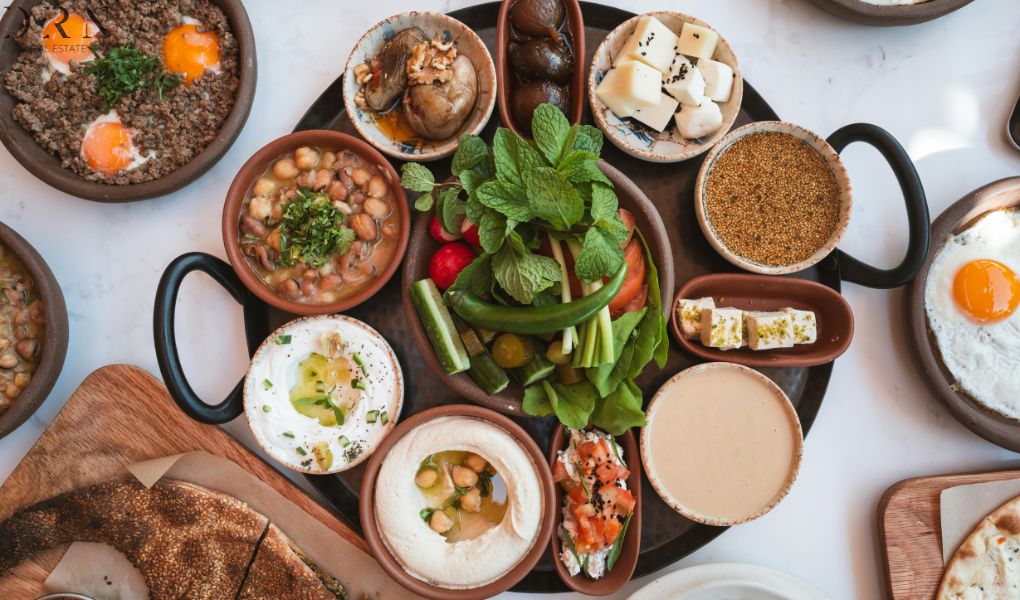
1. Iconic dishes
Get ready to work up an appetite! Traditional Emirati cuisine is rich, fragrant and full-bodied. It blends the flavours of the desert, the sea and oriental spices.
- Machboos is a tasty dish made with rice, spices and meat or fish. A real local treat!
- The harees is a simple but very filling dish. It is made from wheat and meat, which are cooked together for a long time until they take on a creamy texture.
- The Balaleet It combines sweet and savoury flavours. It consists of sweet, spiced vermicelli topped with an omelette. It is mainly eaten for breakfast.
- Dates They’re everywhere! They’re given to guests, eaten during Ramadan and used in desserts or juices.
This feast is almost always accompanied by a mild Arabic coffee, flavoured with cardamom. It is an essential gesture of hospitality.
2. Traditional drinks
Traditional Emirati drinks are simple, natural and full of flavour. They go well with meals and are perfect for when you have guests.
The most famous is the Arabic coffee (gahwa). It is light, sugar-free and flavoured with cardamom, and sometimes with saffron or cloves. It is always served in small, handle-less cups. You’ll be offered some as soon as you step into an Emirati home.
Ginger or mint tea is also very popular. It warms the heart and is often enjoyed whilst chatting with friends or family.
Laban is a refreshing drink made from fermented milk. It’s perfect for cooling down when it’s very hot in Dubai. You’ll also find natural juices, such as date, pomegranate or lemon and mint, which are highly prized for their health benefits.
The impact of cultural traditions on daily life and the property market in Dubai
Traditions influence everything: the way we live, the way we entertain guests, and even the way we building houses in Dubai.
The family is at the heart of culture. Houses are often large, with several bedrooms, to accommodate parents, children and grandparents under one roof. Hospitality plays an important role. Many homes have a majlis, a traditional sitting room in which to welcome guests with respect and comfort.
Respect for privacy is essential. In the villas, areas for women and men are sometimes separate, depending on family traditions.
Modern buildings also embody these values. They often feature prayer rooms, family areas and quiet zones for relaxation. The architecture is designed to suit the climate and local customs: shaded patios, thick walls, and sometimes traditional features such as mashrabiya (decorative grilles).
These traditions also attract the foreign buyers. They are looking for a lifestyle that combines modern luxury with cultural authenticity.
Discover Dubai in a different way: respect its traditions and make the most of the experience!
Well, we’ve come to the end of the article. You now know What are the cultural traditions in Dubai? and why it is so important to know them before visit the emirate.
You now know how to greet people, dress appropriately and avoid making a fool of yourself when Experiencing Dubai with respect. Thanks to all this, you are now ready to travel with peace of mind, respect and an open mind.
Dubai is not just a luxury destination: it is also a city with deep-rooted cultural and religious values. Understanding these values means treating yourself to a more authentic and enriching experience.
Why not take your preparation a step further?
At Dubai Real Estate, we’ll look after your home whilst you relax and get ready for your trip.
→ Contact us now and Set off for Dubai with peace of minde!